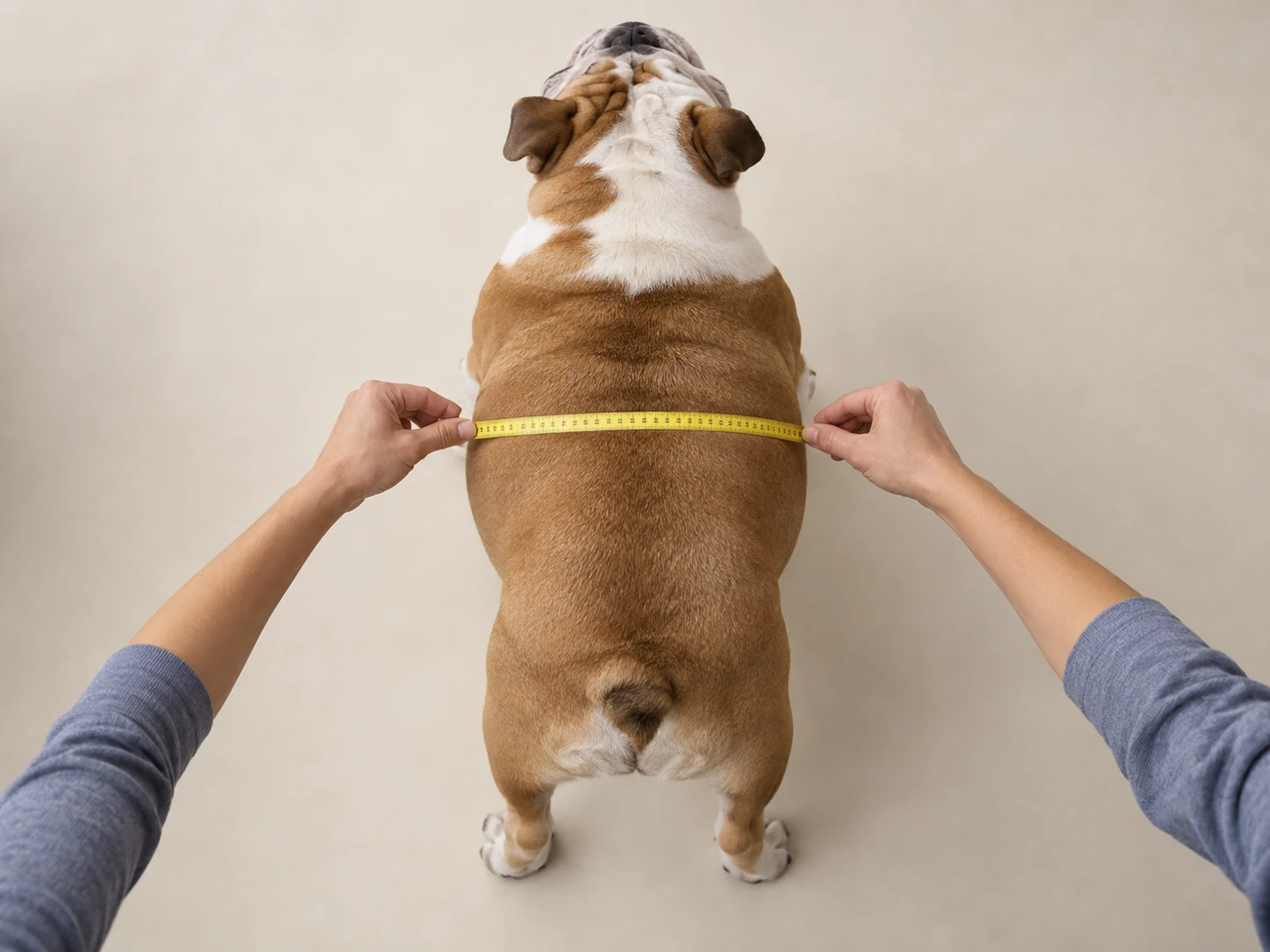
Have your dog stand naturally on a flat floor. Keep each measurement straight rather than following the curve of the body, and record the four measurements below.
Four measurements to record
Start with length and the two heights while your dog is standing naturally, then check body width below.
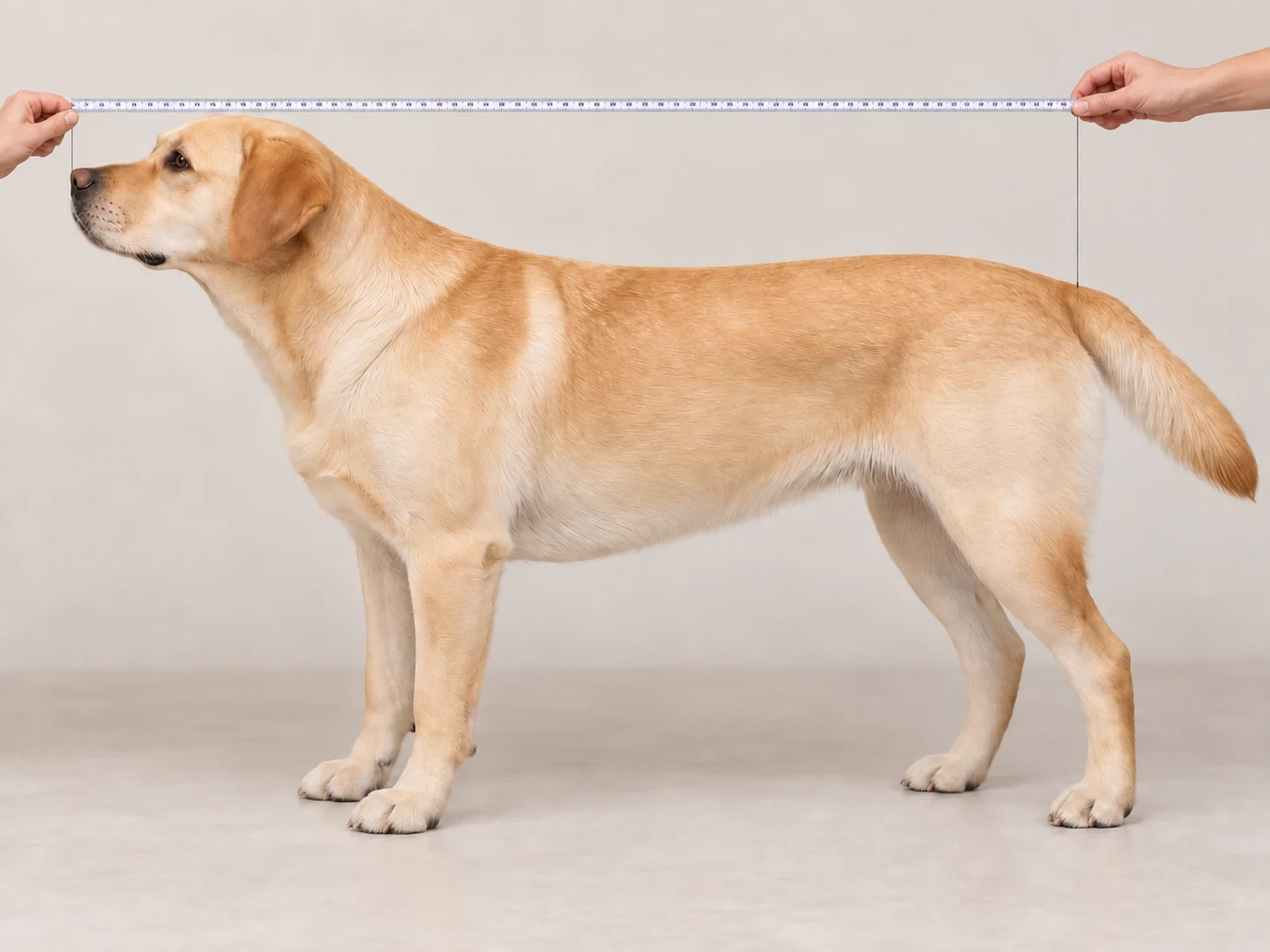
A
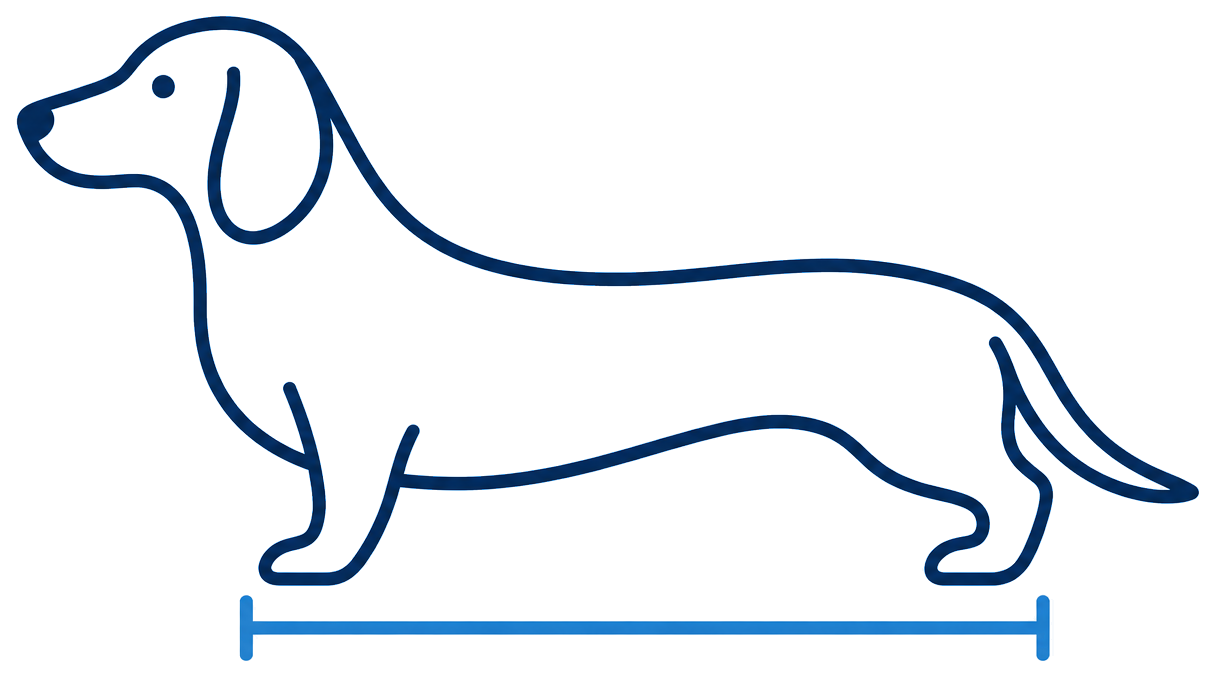
Body length
Measure from the tip of the nose to the root of the tail. Hold the tape straight and taut above the dog, rather than following the curve of its head, neck, and back. The root is where the tail joins the body; do not include the tail itself.
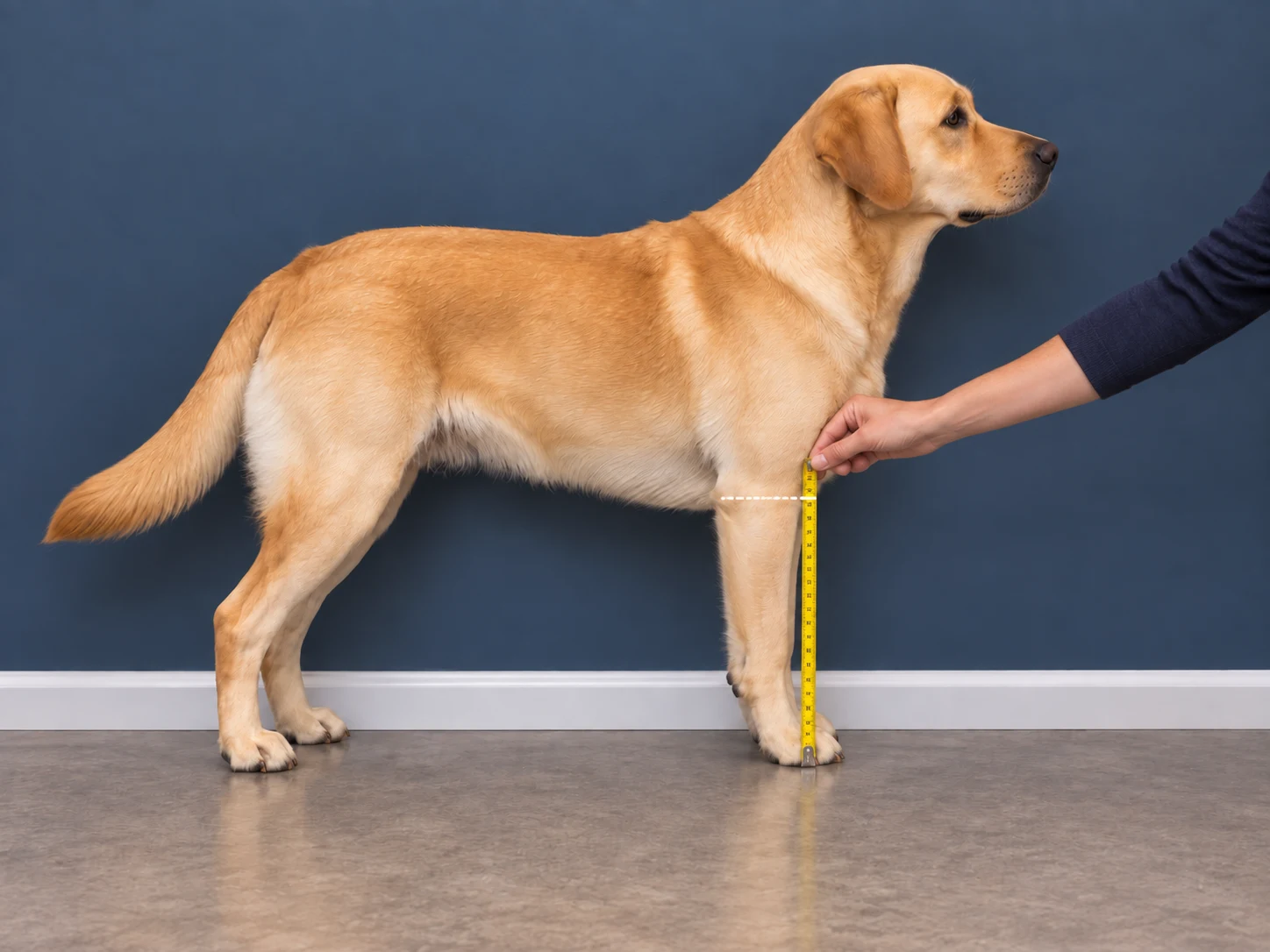
B
Elbow height
Measure from the floor to the backward-projecting elbow of the front leg. The elbow sits near the bottom of the chest. Keep the tape vertical and record this separately from total height.
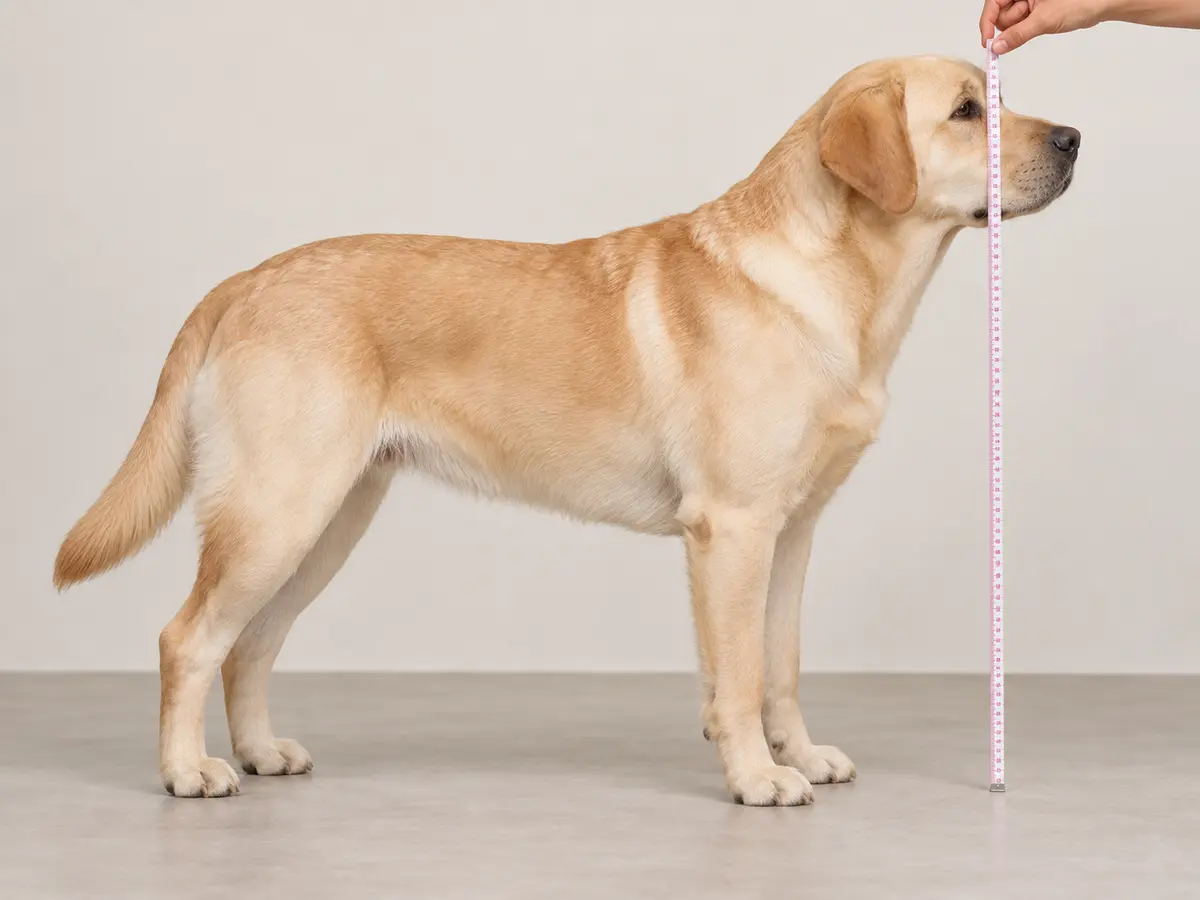
D
Standing height
Measure vertically from the floor to the highest point of the head or ears. Use whichever is higher when your dog is standing naturally.
Keep length and height measurements distinct. Do not include the tail in A, and do not force the dog’s head upward for D.
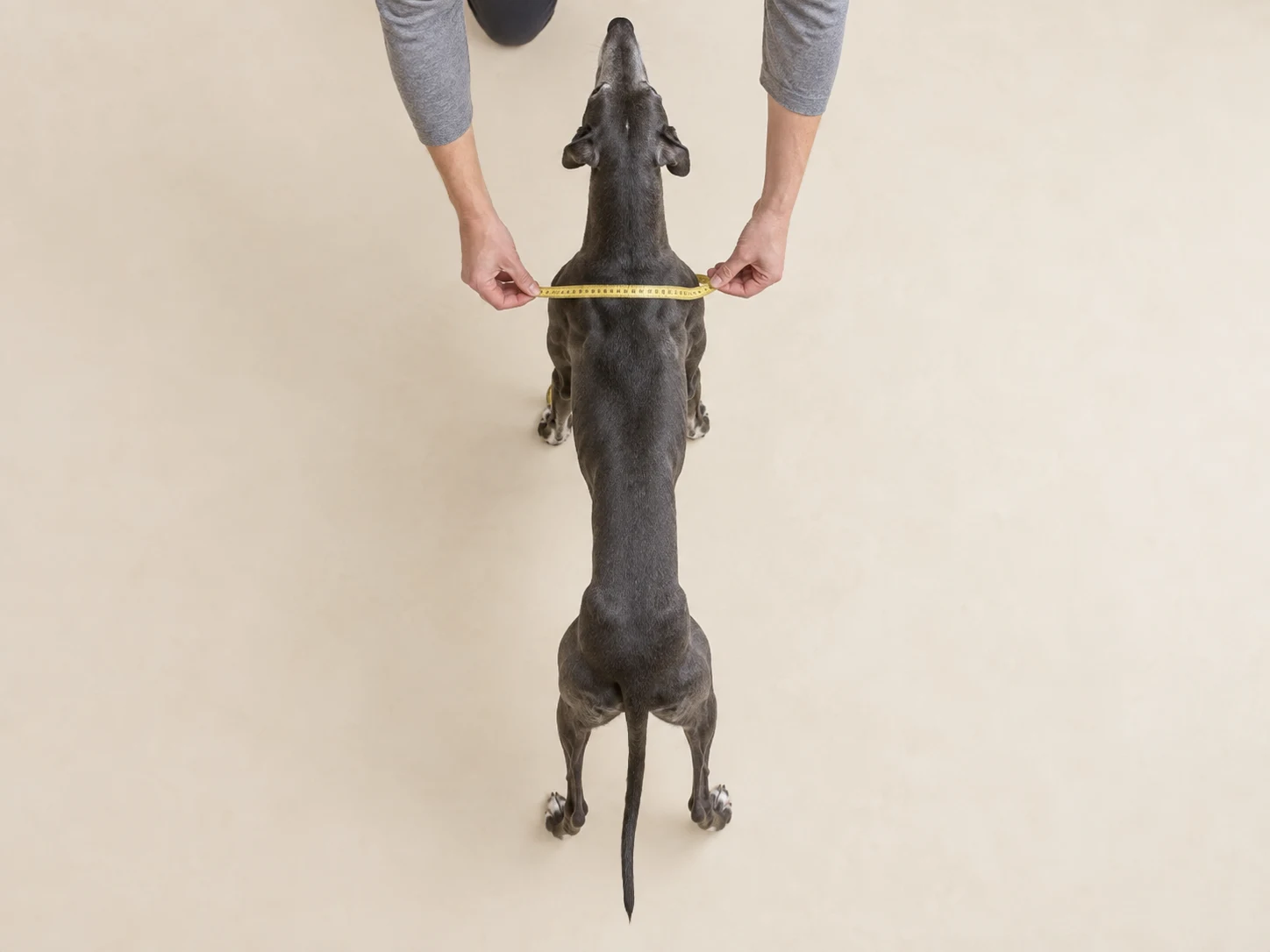
C Body width
Measure the dog’s maximum width straight across from side to side, parallel to the floor. Hold the tape or ruler straight between the outermost points. Do not wrap it around the body or measure its circumference. Check from directly above to find the widest point: this may be at the shoulders and upper forelegs or farther back across the torso.
Slim GreyhoundThe shoulders and upper forelegs are wider than the narrow waist. Measure the straight width across them.Broad English bulldogThe torso extends beyond the shoulders. Measure its maximum straight width, parallel to the floor—not around the body.
For a more reliable result
Measure while your dog is standing squarely, not sitting, crouching or stretching.
Keep all four paws on the same level surface.
Do not force the head upward; use the dog’s natural alert position.
If thick fur hides the body’s edge, part it gently to locate the measurement point.
Keep the tape or ruler straight and steady, without pressing into the coat.
If two readings differ, measure again and record the most consistent result.
These measurements help a pet transport professional assess suitable internal travel-crate dimensions. They do not by themselves certify a crate or confirm aircraft suitability.
 MeasureMyPet